
Direct answer: A strong mural comes down to the same basics: solid surface prep, a clear layout plan, and a painting sequence that builds clean shapes before fine detail.
Quick takeaways
- Prep the wall like you mean it (clean, repair, prime).
- Transfer the design with a repeatable method (grid/projection).
- Block big shapes first; detail is the last pass.
- Protect the work when the environment demands it.
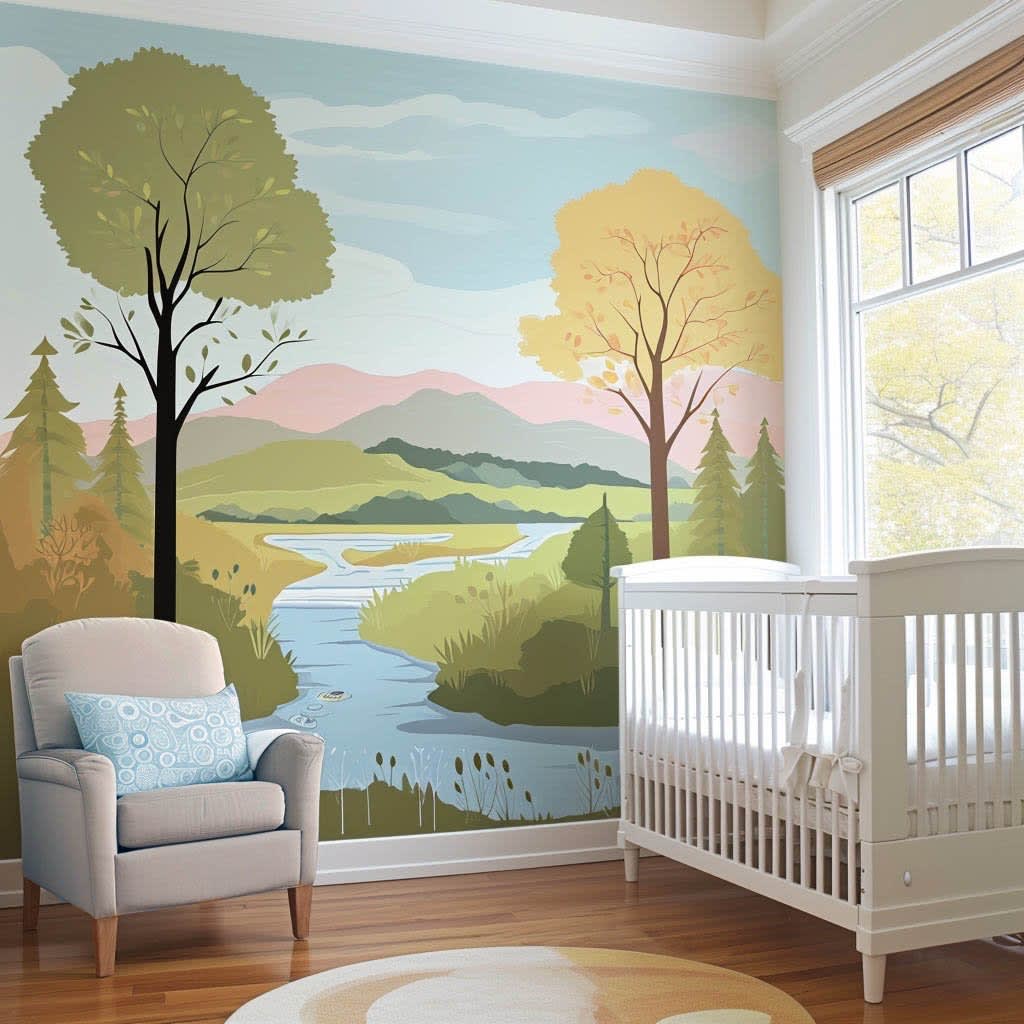
Hey! So, you saw that mural pic, right? Painting one is pretty straightforward, but totally transforms the room. Here’s how it’s done:
Sketching It Out
First, we map out the scene on the wall. Think of it as the rough draft in a sketchbook – it’s where the magic starts. Hills, trees, rivers – they all start as simple lines.
Coloring the Canvas
Next up, painting! It's like filling in a coloring book, but on a larger scale. We mix colors to get those soothing shades of green, blue, brown, and a hint of gold. Each color sets the mood, kind of like how a good playlist sets the tone for a road trip.
Detailing Time
After the base colors are on, we dive into the details. This is where a blob becomes a bird, and a stroke turns into a stone. It’s the part that takes the most patience – like putting together a thousand-piece puzzle.
Final Touches
Finally, when all is painted and dried, the protective tapes come off, and there you have it: a wall that’s not just a wall, but a window to an enchanting landscape.
It’s about making the nursery a place where stories begin, with every glance sparking a little one’s imagination. And if you're thinking about doing this, I say go for it. It's less about being an artist and more about creating a space that feels good – for you and the kiddo.
So, how about it? Ready to make that nursery or any room a bit more magical? Let's chat about it, and maybe even make it happen!
Volatile organic compounds (VOCs) are emitted as gases from certain solids or liquids.
— U.S. EPA, Volatile Organic Compounds’ Impact on Indoor Air Quality, Source
Project checklist
- Surface cleaned + primed
- Layout method chosen
- Palette tested on wall
- Painting sequence planned
- Protection/maintenance plan set
FAQ
Can you paint a mural on any wall?
Most walls can work if they’re properly prepared and the paint system matches the surface. Moisture and flaking paint are the two biggest red flags.
How do you keep the design accurate at scale?
Use a grid or projection to transfer key anchors, then check proportions early before you commit to detail.
Want help with a mural in the Bay Area?
If you want a recommendation for your wall (surface prep, paint system, timeline), send photos and rough dimensions and we’ll help you scope it.